
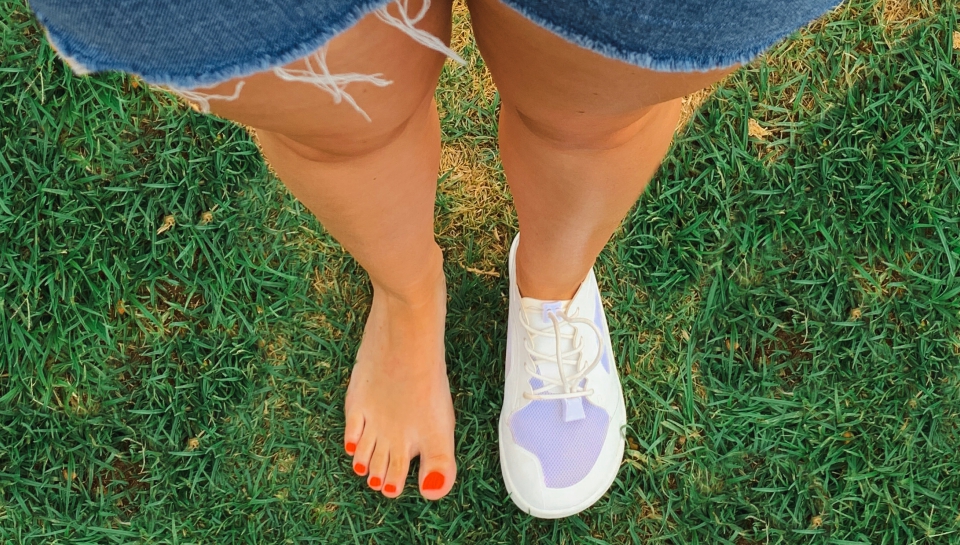
What’s the Right Choice for You?
Shoes are often designed with cushioning, arch support, and thick soles, but are these features really necessary? Many studies now challenge traditional shoe design, showing that barefoot shoes encourage better posture, stronger muscles, and healthier foot mechanics.
The Differences Between Barefoot and Traditional Shoes
| Feature | Traditional Shoes | Barefoot Shoes |
| Sole Thickness | Thick padding and stiff midsoles | Thin, flexible soles for natural movement |
| Arch Support | Built-in, forces unnatural posture | No artificial support, strengthens foot muscles |
| Heel-to-Toe Drop | Raised heel, causes imbalance | Zero-drop, keeps feet aligned |
| Ground Sensory Feedback | Minimal feedback | Enhanced sensory perception |
Why Barefoot Shoes Promote Foot Health
- Strengthens foot muscles – Encourages active movement versus passive walking.
- Improves balance and coordination – Engages stabilizer muscles naturally.
- Prevents common foot issues – Reduces strain on knees, ankles, and back.
Making the Switch to Barefoot Shoes
Transitioning from traditional footwear to barefoot shoes requires time. Start by wearing barefoot shoes for short walks, then gradually increase usage as your muscles adjust.
Curious about the difference? Try a pair from barefeetsa.co.za and feel the freedom of natural movement.
